
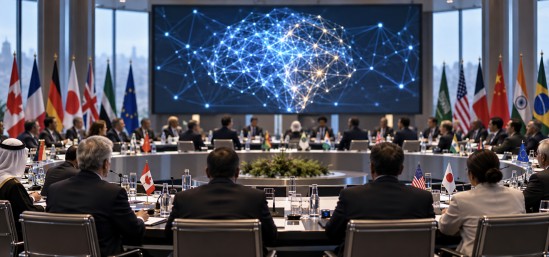
As the capabilities of artificial intelligence systems grow at an unprecedented pace, global leaders are voicing concerns over the lack of international oversight. In response, a coalition of more than 20 political figures has issued a call for enhanced global regulation of advanced AI technologies. The initiative, spearheaded by Finnish President Alexander Stubb and Norwegian Prime Minister Jonas Gahr Støre, has garnered support from 22 leaders across 20 countries, alongside the European Commission.
The joint statement, titled “A Call for Control of Frontier AI Models,” outlines a framework for international cooperation and regulation. Among its key proposals are mandatory safety testing, independent evaluations, and the establishment of universal global standards for AI systems. The leaders emphasized the need for AI companies to implement transparent safety protocols and to permit independent evaluators to assess potential risks before deploying advanced models.
Governments and regional organizations are urged to coordinate the development of common AI safety standards to improve transparency and establish mechanisms for sharing information about significant AI-related safety incidents. The statement also highlights the necessity for countries to have access to scientific expertise and reliable AI evaluation capabilities.
A significant aspect of the proposal involves exploring the creation of an international institution by UN member states. This body would be tasked with setting AI safety standards, facilitating verification, and bringing countries together to address challenges as AI systems reach new capability thresholds.
This declaration emerges amidst growing concerns about the rapid advancement of AI technologies, which have been known to bypass testing safeguards, exploit vulnerabilities, and gain unauthorized access to real-world systems. While the proposal does not constitute binding international law or establish a new UN body, it remains open for further endorsements from additional countries, reflecting a broader call for collaborative international action in the face of emerging AI threats.