
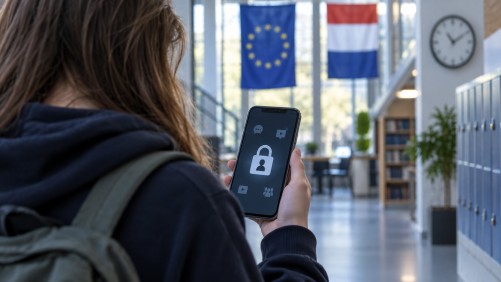
As European nations grapple with safeguarding children’s online experiences, the Dutch government has thrown its support behind establishing a unified minimum age for social media use across the European Union. This move comes in response to growing concerns about the risks young users face on digital platforms and aims to harmonize regulations throughout the EU.
The Netherlands, in collaboration with Spain, has advanced a proposal to the European Commission advocating for a standard minimum age of 15 for social media users. This initiative also emphasizes implementing privacy-friendly age verification methods to ensure compliance. Willemijn Aerdts, the Dutch Digital Economy Minister, underscored the necessity of applying the same protective standards to children online as those in the physical world.
The call for an EU-wide regulation aligns with recent actions by individual countries to restrict social media access for younger users. Notably, Australia implemented a policy barring those under 16 from major platforms in December 2025, while France has adopted a similar ban for those under 15. The UK plans to enforce comparable restrictions starting in 2027.
The European Commission is expected to address these concerns in its forthcoming proposals on child protection within its broader digital policy framework. This discussion becomes increasingly pertinent as privacy advocates express worries over the effectiveness and security of age verification technologies. Earlier this year, the Commission introduced an age-checking application, which faced criticism when a security researcher demonstrated a potential bypass, leading to a necessary security update.
As the EU deliberates on these proposals, the challenge remains to balance effective child protection with privacy and security considerations in the digital age. The efforts by the Netherlands and Spain highlight a proactive stance towards a comprehensive European policy on social media use among minors.