
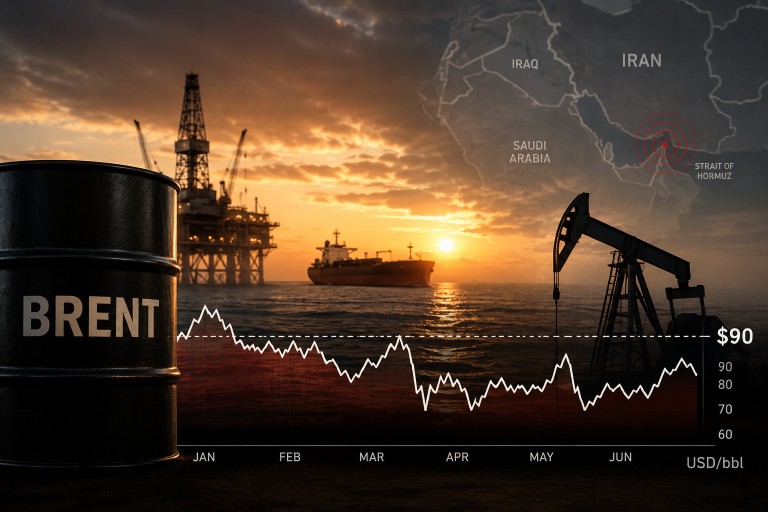
Oil prices have recently soared, with Brent crude approaching $85 per barrel and marking its most substantial weekly increase since April. This rise, amounting to an 11% weekly boost, comes amid renewed military tensions between the United States and Iran, which have disrupted supply chains through the critical Strait of Hormuz. This strategic passageway is crucial for global oil flows, handling about 20% of the world’s supply. Despite these developments, Brent crude is struggling to surpass the recent high of $87.55 per barrel, even as the regional conflict has intensified and tanker movements in Hormuz have slowed considerably.
Market analysts suggest that the oil market remains cautiously optimistic about the potential for diplomatic resolutions, which is currently preventing further escalation in prices. Traders are keenly observing whether global oil inventories begin to decline sharply, which could indicate a tightening of supply, and whether the disruption in Hormuz becomes more extended. While the geopolitical situation remains tense, the oil markets have shown relative stability, with Brent trading within a narrow range, reflecting investor expectations that tensions might de-escalate rather than escalate further.
The Strait of Hormuz continues to be a focal point for energy markets worldwide. The recent slowdown in tanker traffic has prompted exporters to explore alternative routes to mitigate their reliance on this strategic channel. This shift is already impacting markets beyond crude oil, as refining margins in the United States have increased due to tightening supplies of diesel and gasoline. Similarly, fuel markets across Europe are showing signs of strain, partly due to reduced fuel exports from Russia, which have exacerbated the pressure on global energy supplies.
As the situation unfolds, market participants are closely monitoring two critical developments: the potential for a noticeable decline in oil inventories that could signal a supply shortage, and the outcome of diplomatic efforts. Should these negotiations fail, it could lead to a more prolonged disruption in the Gulf region. Until either scenario occurs, analysts predict that Brent crude is unlikely to break the $90-per-barrel threshold, despite the ongoing geopolitical risks and uncertainties.