
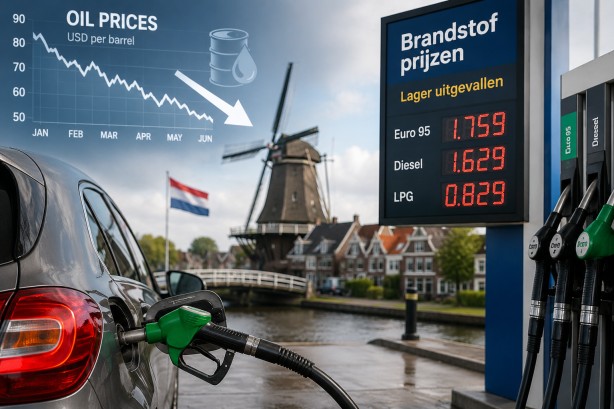
In a recent development, oil prices have seen a significant drop as the United States and Iran paused military strikes, a move that is likely to lead to lower fuel prices in the Netherlands in the near future. Brent crude, which was priced at more than €88 per barrel at the end of last week, has now decreased to just over €81. This reduction in oil prices is further aided by the strengthening euro, as oil transactions are conducted in US dollars, thereby making imports more affordable for European buyers.
Despite this reduction in crude oil prices, the advisory gasoline price in the Netherlands remains high at €2.634 per liter. This figure is only slightly below the historic peak of €2.646 per liter recorded earlier this year. The surge in fuel prices is a result of the escalation in the conflict involving Iran, which intensified in late February, causing a significant rise in oil prices.
Economic analysts anticipate that the lower oil prices will eventually be mirrored at fuel stations across the Netherlands. However, it is typical for retail fuel prices to adjust with a delay following fluctuations in global oil markets. This lag means that consumers might have to wait a few days before seeing any significant changes at the pump.
The correlation between the exchange rate and oil pricing plays a crucial role in these developments. As the euro gains strength against the US dollar, the cost of importing oil into Europe decreases, which is expected to relieve some of the pressure on fuel prices in the region. This dynamic could provide some respite to consumers who have been facing high fuel costs in recent times.